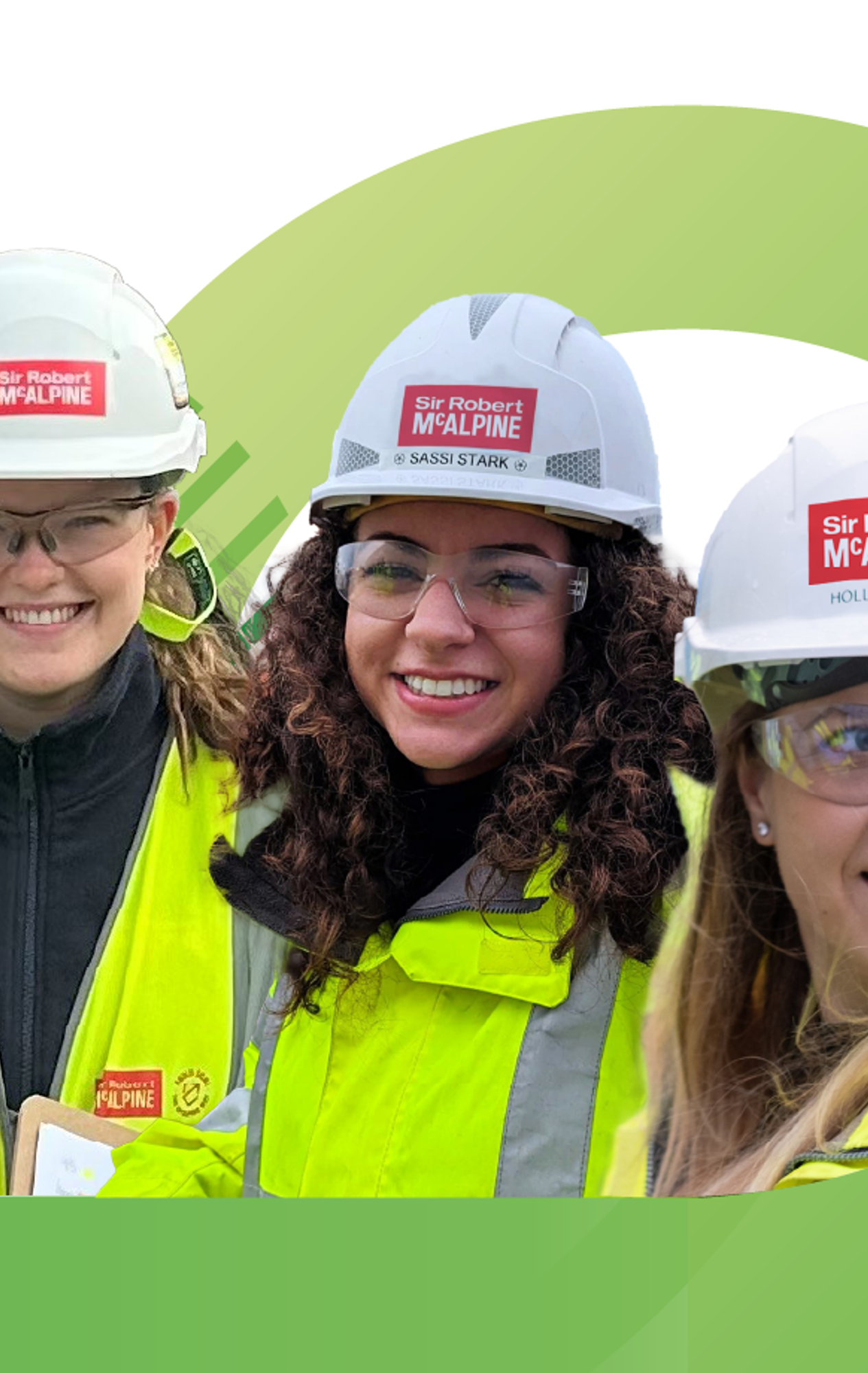
Celebrating International Women's Day with Lauren McCarthy
16 Mar 2026Lauren McCarthy, Sustainability Manager on the Therme project, details her path into the industry, and the importance of sustainability in construction
To kickstart Black History Month, we remember Frederick Douglass, the most powerful speaker and writer of the abolitionist movement.
We start with the story of Frederick Douglass, the most powerful speaker and writer of the abolitionist movement. Newcastle University named a building in his honour to reflect its core values of justice, equality, diversity and inclusion.
Frederick Douglass was born into slavery in Talbot County, Maryland, in 1817 or 1818. He was raised by his grandmother, who was a slave. When still a child, he was taken from her and sent to Baltimore, Maryland, where he worked as a servant in the household of shipbuilder Hugh Auld. Auld’s wife, Sophia, began teaching young Frederick to read and write. As Douglass grew up, he developed ideas against slavery. He believed in human equality, an idea which he found in the Declaration of Independence.
In 1838, Douglass escaped from slavery. He disguised himself as a sailor and headed north, making his way to New York City where he married and had five children. They lived in a community of free black people and became active in the abolitionist movement.
In the years leading up to the Civil War, Frederick Douglass was the most powerful speaker and writer of the movement. An eloquent storyteller, his stories about his life as a slave got the attention of William Lloyd Garrison, editor of the abolitionist newspaper The Liberator. Garrison encouraged Douglass to write about his experiences. The result was the Narrative of the Life of Frederick Douglass, An American Slave. The book was published in 1845 and became a best-seller.
An anti-slavery campaigner – and at that time, an escaped slave himself – Frederick Douglass came to Newcastle in August 1846 as part of a lecture tour of Britain and Ireland, during which he spoke to packed halls and churches about slavery in America. He gave two addresses to meetings in Newcastle, and also spoke at an event in North Shields. He returned to Newcastle in December for two further speaking engagements. While in Newcastle, Douglass stayed with Anna Richardson and her sister-in-law Ellen, who lived in Summerhill Grove. The two Quaker women actively campaigned for a number of social causes, and raised £150 to buy his freedom.
Naming our new learning and teaching centre in honour of Frederick Douglass is a further acknowledgement of the university’s long-standing commitment to social justice, and fitting tribute to the region’s role in the global struggles for freedom.
Professor Julie Sanders, Deputy Vice-Chancellor of Newcastle University
Lauren McCarthy, Sustainability Manager on the Therme project, details her path into the industry, and the importance of sustainability in construction
After joining the industry by accident, Kelly White, Head of Bidding, shares how she has developed a passion for construction and become a fervent advocate for equity through our Affinity Networks.
As we celebrate National Inclusion Week 2024, we share stories from women in construction, reflecting our commitment to creating an inclusive workplace.
The extension opened on 1st April 1901 and contains a series of major viaducts, including the iconic Glenfinnan Viaduct
The team gathered to celebrate a topping out ceremony following steels completion in late January
Last month, Rachael Smith, People and Culture Executive Director at Sir Robert McAlpine, and Katy Maloney, Trainee Quantity Surveyor, spoke at the Empowering You Conference with Forces Employment Charity.