Digital Construction
We invest in industry-leading software and mobile applications. So we can deliver cost efficiencies and top performance - each and every time.
Darron Hall, Head of Sustainability, and Kathryn Castledine, Senior Sustainability Manager, explain why the construction industry must look beyond recycling and embed circular thinking
For too long, our industry’s response has focused on what happens once materials are discarded. We have improved segregation, increased recycling and diverted significant volumes away from landfill. These steps are both laudable and welcome, but they address the consequences of waste rather than its causes.
The more important question is: how do we prevent materials from becoming waste in the first place?
A circular approach challenges us to retain the value already embedded within buildings, components and materials for as long as possible.
 Circularity is one of the three pillars of our Sustainable Engineering Excellence strategy, alongside Carbon and Social Impact.
The strategy is how we harness our knowledge and relationships to deliver more sustainable solutions by making choices that matter. Our Circularity priorities are clear: reduce waste by designing it out; create buildings that are flexible, adaptable and capable of disassembly; and maximise the reuse and upcycling of materials.
The greatest circularity opportunities are created long before materials arrive on site. They emerge through early decisions about design, procurement, manufacturing, construction, operation and eventual deconstruction.
Instead of beginning with the assumption that waste is inevitable and considering how best to manage it, we need to start by asking whether a material is required at all.
This change in mindset moves us beyond waste management and towards circularity.
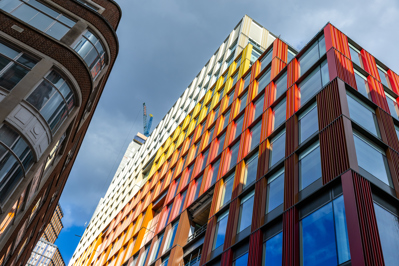 Circularity isn’t merely an environmental obligation. There is a strong business case for it too.
Using fewer resources and reducing waste can lower purchasing and waste management costs during construction. At the end of an asset’s life, components that can be safely salvaged, reused or remanufactured retain value instead of becoming a financial and environmental liability.
Clients, designers, consultants, contractors, manufacturers and suppliers all have an important role in the choices that determine whether materials retain or lose their value, so early contractor and supply chain involvement is essential. It gives all stakeholders the opportunity to identify reusable materials, test technical and commercial feasibility, and embed circular requirements before designs and procurement decisions become fixed.
Being able to demonstrate the commercial value of circularity also requires a wider change in how we measure performance. The data, benchmarks and key performance indicators we collect must evolve to help evidence these claims. Digital materials passports, such as the ones we used at 1 Broadgate (above right), are already helping us to collect and store this vital information.
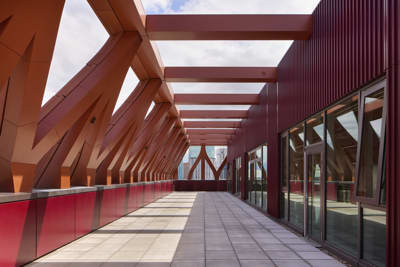 Our work at Three Chamberlain Square (right) in Birmingham demonstrates what can happen when circular principles influence decisions from the outset.
During the basement excavation, we retained and reused approximately 2,100m³ of material as engineered backfill behind the retaining walls, and a king post wall installed as temporary works was assessed, strengthened and incorporated into the permanent structure.
The project’s 8,000 pieces of terracotta façade are also fully demountable, meaning the tiles can be refurbished and recycled in the future rather than demolished.
At 2 Finsbury Avenue, circularity was embedded into the deconstruction of the existing buildings. Ninety-eight steel beams were carefully dismantled and re-engineered for use as secondary steelwork within the new development, saving 27 tonnes of carbon across lifecycle stages A1 to A4.
The project also recovered approximately 2,500m³ of concrete for reuse in the foundations and removed around 9,500m² of raised access flooring for reuse. These outcomes were only possible because reuse was considered early and supported by collaboration between the client, project team and specialist supply chain.
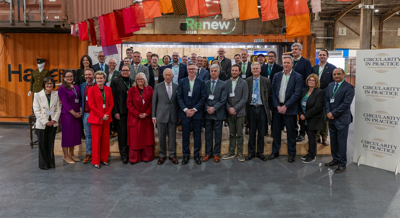 As a founding partner and signatory to the Circularity in Practice initiative (pictured, right), we are working alongside like-minded companies to identify opportunities, turn them into practical outcomes and, crucially, share our ideas and best practice.
There is no single intervention or silver bullet, and embedding circularity within construction is a bigger challenge than any one company can solve alone. Harnessing collective cross-industry knowledge will accelerate the progress we can make.
Recycling will remain important, but it should not be our starting point. Our ambition must be to maintain the usefulness and value of materials for as long as possible.
By embedding that principle into design, procurement and delivery, circularity can help us reduce carbon, conserve resources, lower costs and create buildings that are better prepared for the future. That is what Sustainable Engineering Excellence means in practice.
We invest in industry-leading software and mobile applications. So we can deliver cost efficiencies and top performance - each and every time.
Sir Robert McAlpine Capital Ventures has secured a place on key lots in England, Scotland and Wales strengthening its ability to pursue major healthcare and public sector opportunities
The National Framework for Major Works 2026 is the third generation of the major works framework.
Event at 2 Finsbury Avenue shines a spotlight on the Broadgate Future Talent programme


