
Exercise Resilient Way kickstarts our future leaders’ journey
08 Oct 2026The company's investment in young talent has led to the launch of a new Leaders of the Future programme
Company Social Value Manager, Anjana Raj, and Senior Social Value Manager, Alex Ward, reflect on the importance of equity
On the surface, equality feels like the right answer. Treat everyone the same. It’s simple, fair, and easy to explain.
But in reality, it’s not always that straightforward.
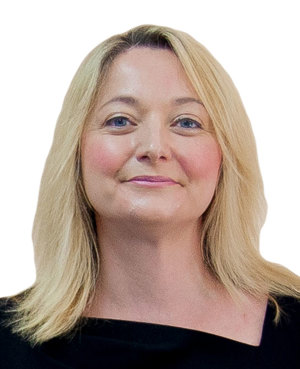 Alex Ward, Senior Social Value Manager (pictured right), shares a moment that really stuck.
“Running an International Women’s Day event on site made me stop and properly think about the difference between equity and equality. I’d always supported equality, of course. But equity didn’t fully click until I heard a simple analogy: Equality is everyone getting the same shoes. Equity is everyone getting shoes that fit.
"That stayed with me.”
And when you think about it, it makes perfect sense.
We’ve all been there, given something that’s technically “fair,” but doesn’t quite work for us. The wrong fit. The wrong support. The wrong timing. On paper, it’s equal. In reality, it can hold you back.
Now imagine the difference when things do fit. Suddenly, there’s no friction or discomfort. Just the confidence to move forward.
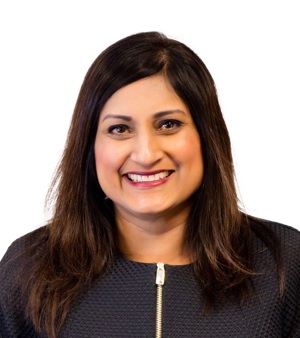 For Anjana Raj, Company Social Value Manager, this is where social impact becomes real.
"We’ve long believed in the power of social value, working to create a positive and lasting impact in the communities where we operate. In 2024-25, we generated £1.2bn in social impact across our local communities, but we know that the quality of that impact matters just as much as the number."
Social impact isn’t about identical treatment or good intentions, it’s about outcomes.
People don’t all start from the same place, and when we offer the same support to everyone, those facing bigger barriers are often left behind.
Equity is about recognising that and responding to it so everyone has a genuine chance to succeed.
That shift, from treating everyone the same to supporting people differently, is what makes the biggest difference.
Especially in our industry.
In construction and infrastructure, this matters more than ever.
We’re facing skills shortages. We want to open up the industry to more people. And we need our workforce to better reflect the communities we’re part of.
If we focus only on equality, we risk missing the point, because access alone isn’t enough.
It can be as simple as this:
Equality: Anyone can apply for a job.
Equity: We remove the barriers that might stop someone applying or staying in that job.
And those barriers are real.
So across our projects, we try to address them in practical ways:
Covering travel costs and providing meals for young people on work experience
Offering flexible working so single parents can balance work and childcare
Creating inclusive environments for people with Special Educational Needs by: asking what works best for them; being clear and consistent in communication; and focusing on strengths, whether that’s creativity, attention to detail, or deep focus
These might seem like small actions, but they add up. And more importantly, they make opportunities real.
We often talk about “doing the right thing”, and that intention is important. But as Alex Ward reflects, intention on its own isn’t enough.
“We all start in the right place. We want to create opportunities and make things fair. But the real question is: what difference is it actually making? That’s where the shift happens.
“When we take the time to think about what people really need, not just what’s available, we start to see things differently. It’s no longer about offering opportunities and hoping they land well. It’s about shaping them so they actually work for the people they’re meant for.”
We’ve seen this first-hand. It isn't a one-off activity that makes the difference, it is consistency, showing up, building relationships, and giving young people the time and space to grow in confidence.
As Alex puts it: “It’s often the practical, thoughtful support that makes the biggest difference, removing small barriers that might otherwise stop someone progressing.”
It’s a good reminder that real impact rarely comes from big gestures alone. More often, it’s built through consistent, considered action.
Our work at 1 Broadgate, delivered for British Land as part of the Broadgate Framework, shows what this looks like in practice. Rather than spreading effort evenly, we focused it where it could make the greatest difference, matching support to need.
Broadgate Future Talent
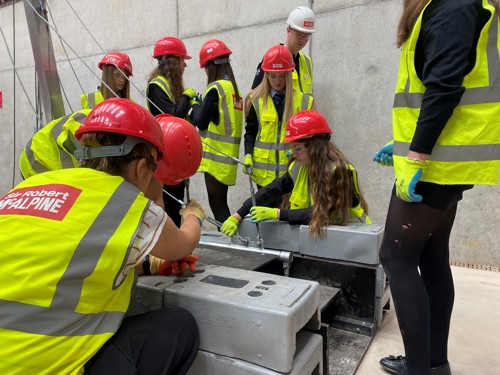
In 2023, in partnership with British Land and the Construction Youth Trust, we launched Broadgate Future Talent, a collaborative five-year project to create new apprenticeship pathways for young Londoners.
The prize was designed specifically for under-represented architecture students, delivering paid placements, mentoring and real-world project access to those who might otherwise struggle to break into the profession. Its impact speaks for itself: the 2023 winner went on to contribute directly to the Changing Places facility at 1 Broadgate, a tangible route from disadvantage into live project delivery.
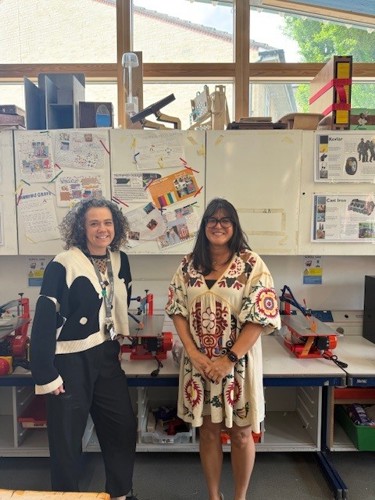 A deliberate focus on young women, an under-represented group in construction, through sustained, repeated engagement rather than one-off visits. That continuity was itself an equity choice: building relationships over the life of the project to embed careers insight for those less likely to see construction as a pathway. It concluded with the donation of two Hegner saws (see right) to strengthen the school’s Design and Technology provision.
Targeted support for students with special educational needs and disabilities, a group that faces particular barriers to employment. Providing tailored work placements is a textbook equity intervention, adapting opportunity to meet specific needs.
Our educational engagement was concentrated particularly in Hackney and Tower Hamlets, two of London’s more deprived boroughs, rather than spread evenly. Directing resources towards areas of greatest need is equity in action.
Volunteers supported disadvantaged 5- to-7-year-olds learning to read, a targeted intervention for children at risk of falling behind.
Our partnership with My Big Career provides online career coaching aimed at young people from disadvantaged backgrounds, helping them take their first steps towards a career.
The same principle shaped how work and investment flowed. Of the 44 apprentices on the project, 10 were specifically local to the City of London, and £15m of spend was directed locally, prioritising the communities most affected by the development.
In partnership with social platform, ActionFunder, we allocated grants totalling £25,000 to eleven grassroots projects local to the site, championing community empowerment and social investment. This targeted funding responded directly to local need rather than broad, undifferentiated giving.
Taken together, these are not one-off gestures. Each directs support to where barriers are highest, and that, in essence, is what equity means.
 For Anjana, this is where the conversation naturally leads next.
“The more we talk about this, the clearer it becomes that equality is a starting point, but it’s not the finish line.”
Treating everyone the same can feel like the right thing to do. But in practice, it doesn’t always give people what they need to succeed, and that’s where equity comes in.
“Equity asks us to pause and really listen. To understand where people are starting from, and to be open to doing things differently.”
It’s not always the simplest approach. It takes more thought, flexibility, and sometimes a willingness to challenge the way things have always been done.
But it’s also where the biggest change happens.
“For me, it comes back to outcomes. Are we creating opportunities that genuinely work for people? Are we setting them up to succeed, not just to access something?”
At Sir Robert McAlpine, this thinking is becoming part of everyday decision-making, not as a standalone initiative, but as something embedded in how we approach social value, our people, and the communities we work in.
Because ultimately, "it’s not just about what we build, it’s about whether the opportunities we create actually work for everyone.”
About the authors
Alex is an experienced Senior Social Value Manager who has designed and delivered impactful social value programmes that create lasting benefits for communities. Alex is committed to ensuring that social value is not only achieved but embedded as a core organisational principle, fostering long-term social change. Dedicated to advancing equity, equality, and inclusive growth, with extensive experience embedding social value principles across construction projects Alex champions long term social change.
Anjana’s career in the construction industry has been shaped by her commitment to equity, education, and representation. She brings a valuable perspective to conversations about inclusion, belonging, and the future workforce.
Passionate about driving meaningful change, Anjana champions programmes that create employment and skills opportunities, support local businesses, and foster long-term community wellbeing. Her work is grounded in a belief that construction can be a powerful force for social and environmental good, aligning closely with Sir Robert McAlpine’s commitment to Sustainable Engineering Excellence.
The company's investment in young talent has led to the launch of a new Leaders of the Future programme
Introduction of integrated information hubs impresses judges at Building Innovation Awards 2026
This independent industry certification recognises our commitment to building a workplace where everyone can thrive

