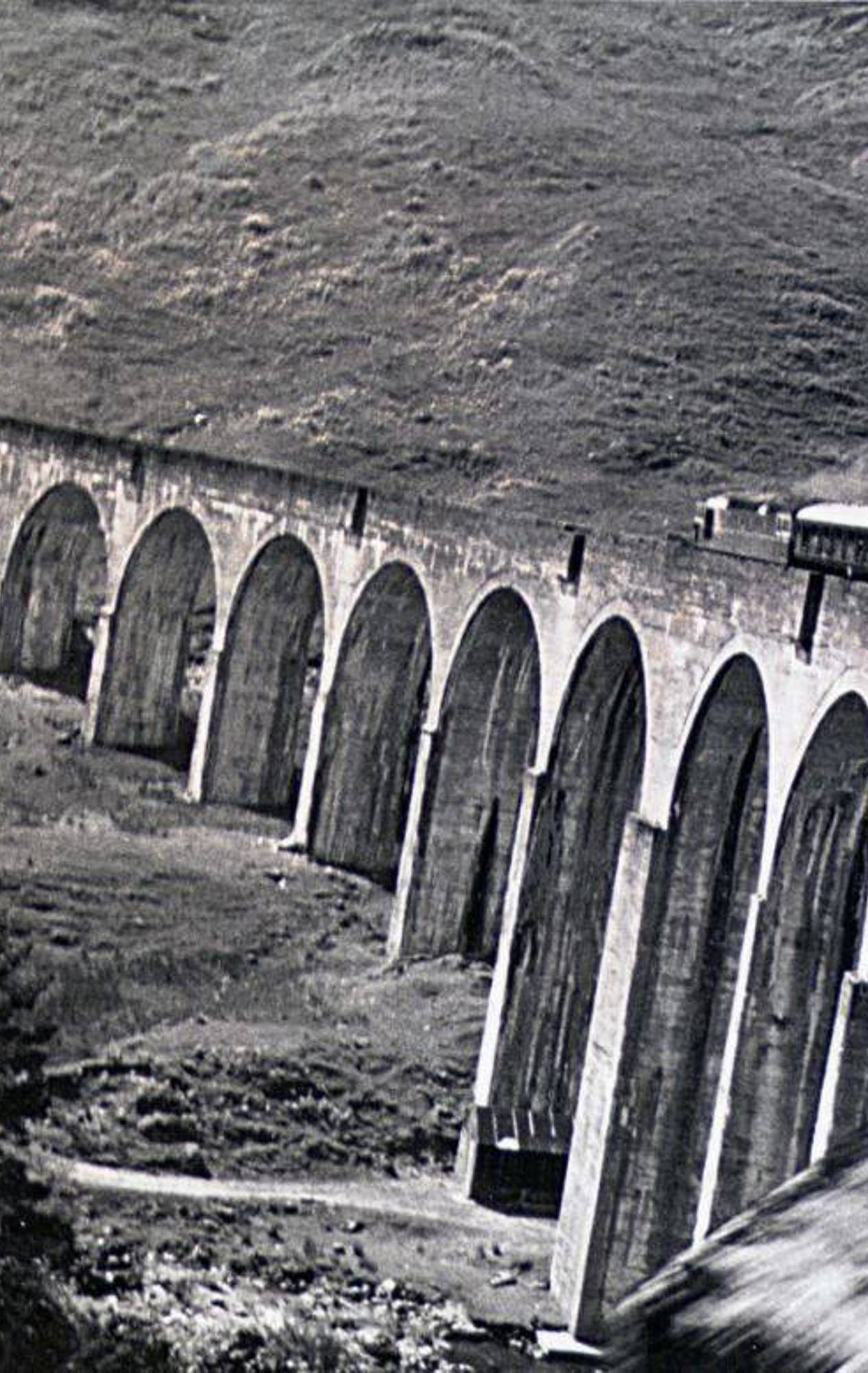
1st April marks 125 years since the completion of the Mallaig Extension of the West Highland Railway and highlights a significant moment in our history.
 Construction began in 1897 under the engineering partnership of Simpson & Wilson, with Robert McAlpine and Sons appointed as principal contractor. The project would go on to cement the company’s reputation for innovation, particularly through its pioneering use of mass concrete on an unprecedented scale.
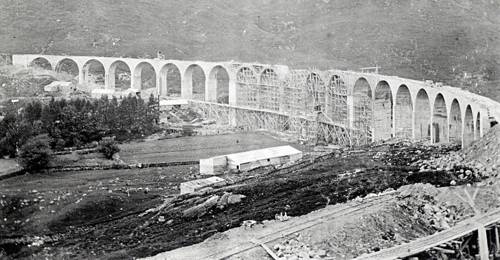
Among the most notable structures delivered were a series of major viaducts, including the iconic Glenfinnan Viaduct (pictured right, under construction in 1898), alongside those at Loch nan Uamh, Morar, and Borrodale.
At the time of its completion in 1901, Glenfinnan was the longest concrete railway bridge in the UK, showcasing the firm’s willingness to push engineering boundaries.
The project was not without its challenges. Early sections progressed relatively smoothly, but the route’s geology, comprising mica schist, quartz, and gneiss proved difficult to excavate. The use of gelignite for blasting accelerated progress but was dangerous. In response, inspired by a trip to the dentist, Malcolm McAlpine introduced innovative drilling techniques, including water-powered turbines drawing from nearby lochs. (The dentist had used high pressure water to power the drill.)
In response to resistance from local landowners over the appearance of concrete, McAlpine added red colour to the mix and, by scoring the surface, emulated the look of dressed granite. This blend of engineering innovation and sensitivity to context remains a hallmark of the company’s legacy.
A special ceremony is taking place today (Wednesday 1st April) at Glenfinnan Museum to mark the occasion.